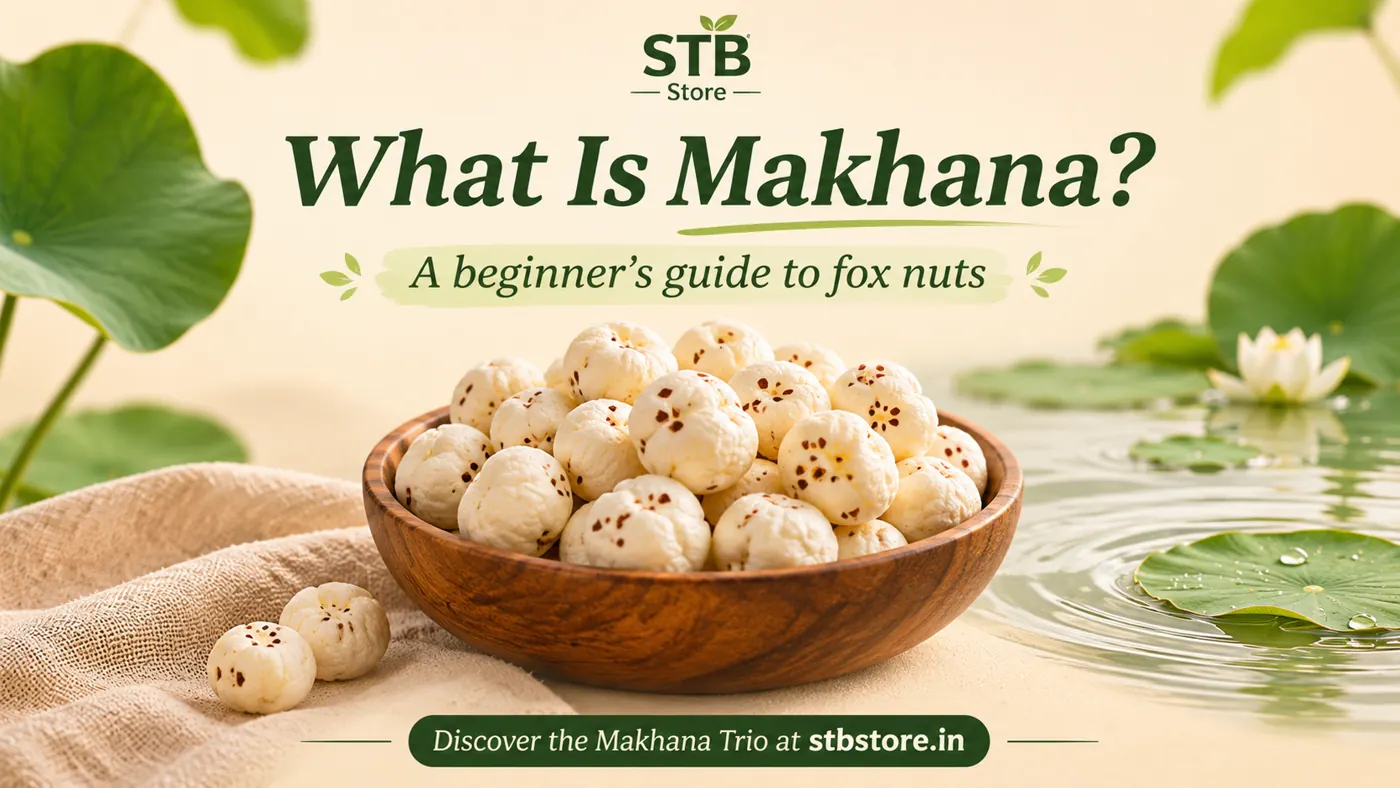
If you have ever been offered a bowl of light, crunchy white snacks with evening chai, you may already know makhana. In homes across India, makhana is served plain, toasted with ghee, spiced for a savoury snack, and cooked into dishes such as kheer. It has also become a familiar sight in packaged snack aisles. But what exactly is makhana, and how does it turn from a water-grown seed into something deliciously crunchy?
This guide explains the basics without exaggerated health promises. You'll learn where makhana comes from, what happens before it reaches a packet, and how to choose and enjoy it.
What is makhana?
Makhana is the edible seed of Euryale ferox, an aquatic plant. The seeds are commonly called fox nuts or gorgon nuts. They are harvested, dried, heated and popped to make the pale, airy, irregularly shaped pieces sold as makhana. Unlike popcorn, which comes from maize, makhana begins with an aquatic plant. The familiar white puff is the processed seed rather than a nut plucked from a tree.
Makhana is closely associated with Bihar, especially the Mithila region. Agricultural research organisations in India study its cultivation, processing and commercial potential. For an approachable official overview, see the ICAR National Research Centre for Makhana.
Why is makhana popular?
One reason is versatility. A lightly roasted handful is simple enough for an ordinary work break, but the same ingredient can feature in festive desserts or savoury dishes. Its relatively neutral taste makes it a convenient base for seasonings. Add a small amount of ghee and salt for a straightforward snack, or try spices, pepper and herbs when you want stronger flavour.
Another reason is texture. Freshly roasted makhana can be crisp without feeling heavy in the mouth. It is also easy to portion into a small serving bowl, which is useful for sharing with family or keeping at your desk. Individual preferences, ingredients and portions matter more than any single label such as “superfood.”
How does makhana go from seed to snack?
Producing popped makhana takes several stages. Seeds are collected from the aquatic crop, cleaned, graded and dried. They then undergo heating and popping. The exact processes and equipment vary, and processing has traditionally been labour-intensive. The result is the expanded, pale edible product shoppers recognise.
Size and appearance can vary. Larger or more intact pieces may be preferred for certain snack uses, while smaller pieces can be useful in mixes or cooking. However, size alone is not a complete measure of flavour, freshness or quality. A trustworthy seller should provide clear information about the pack's net weight, ingredients and relevant labels.
Is makhana nutritious?
Makhana supplies food energy and contains carbohydrates, protein and minerals. Its exact nutrient values depend on the product, processing and serving size. Plain popped makhana and flavoured roasted makhana should not be treated as nutritionally identical: added oil, salt, sugar, cheese blends or other seasonings can change the overall profile.
When you compare products, look at the nutrition panel per 100 g and per portion when available. Check the ingredient list rather than assuming every makhana product is low-salt, low-fat or suitable for a particular diet. Makhana can fit into varied eating patterns, but it does not cure diseases or replace balanced meals. For a medical dietary restriction, seek advice from a qualified professional.
How can you enjoy plain makhana at home?
The simplest method is dry roasting. Place a heavy pan over low to medium heat, add plain makhana and stir regularly. As it warms, the pieces become crisper. Remove a piece, let it cool briefly and test its crunch; if the centre is still chewy, roast a little longer. Avoid high heat that could scorch the outside before the centre dries.
Once the makhana is crisp, you can add a small amount of ghee or oil and your preferred seasoning. Try salt and black pepper for a simple version, turmeric and chilli for a warm savoury flavour, or a pinch of cumin and dried mango powder for a tangy option. Let the roasted makhana cool before packing it into an airtight container.
For a quick snack plate, pair the makhana with cut fruit or another food you enjoy. Makhana can also be added just before serving a dry snack mix for crunch. If you add it too early to a wet preparation, the pieces will soften.
How is plain makhana different from flavoured makhana?
Plain makhana offers flexibility: you decide the oil, spices and preparation. Flavoured makhana provides convenience when you want a ready-to-eat option. Both have a place in a pantry, and neither is automatically the better purchase for everyone.
The flavour name alone will not tell you everything about the ingredients. Cheese-style seasoning, for example, may contain milk-derived components; spicy variants can contain other allergens. Always read the specific product label. This is especially important for children and people with food allergies.
What should you check before buying makhana online?
Begin with the basics. Is the net weight clear? Are the ingredients and allergens easy to find? Does the seller explain delivery eligibility and final pricing? Does the listing show actual product packaging rather than only decorative illustrations? Is there a way to contact the seller if something arrives damaged or incorrect?
Compare value at the level of what you will actually receive. A combo with several snack formats offers variety, but its total net weight, ingredients, flavours and delivery terms should be visible before checkout. Check that the selected flavour matches your preference and that the destination PIN code is serviceable.
Meet the STB Store Makhana Trio
If you would like to try makhana in different forms, STB Store's Makhana Trio brings together three original supplier packs: 100 g plain makhana, 90 g roasted makhana in your choice of Peri Peri or Mac & Cheese, and 100 g makhana & millet cookies. The combo is currently listed at ₹499 including delivery to eligible PIN codes, for a total of 290 g net food weight. Orders are prepaid, and the website checks delivery serviceability before payment.
This is a convenient way to explore plain, savoury and baked snack formats in one order. Read the ingredient and allergen details on the product page before choosing. The Mac & Cheese and Peri Peri variants contain peanuts; the cheese variant also lists milk and wheat. The cookies list wheat, milk and coconut.
Explore the Makhana Trio and check delivery to your PIN code
Frequently asked questions
Is makhana the same as popcorn?
No. Popcorn is popped maize, while makhana is the popped seed of the aquatic Euryale ferox plant. Both can make crunchy snacks, but they are different foods.
Do I have to roast packaged plain makhana?
Plain makhana sold ready for kitchen use is commonly roasted again at home for extra crispness. Follow the pack's preparation and storage instructions; do not assume all products have identical directions.
Can makhana lose its crunch?
Yes. Exposure to humidity can soften it. Keep the pack properly sealed and store it according to its label. Small quantities can be reheated gently if the product's instructions permit.
Can I order just one item from the STB Store combo?
At present, STB Store lists the three-pack Makhana Trio as a combined product rather than selling its components individually.
The takeaway
Makhana is a versatile Indian food made from popped aquatic seeds. Its appeal comes from its distinctive crunch, mild taste and flexibility in cooking. If you are new to makhana, begin with a small plain portion, experiment with seasoning, and compare packaged options by ingredients and labels rather than health hype.
When you want to explore several snack styles together, visit STB Store to see the Makhana Trio, review allergens and check whether delivery is available to your PIN code.
Further reading
This guide is for general food education, not medical advice. Nutritional details and ingredients vary by product; refer to the package label.