The Makhana Journal · Article 4 · Names & identity
Makhana vs Fox Nuts: Are They the Same Thing?
Are makhana and fox nuts the same? Learn the difference between everyday names, botanical seeds, popped makhana and misleading snack labels.
The short answer—and why people still get confused
Yes. In most Indian food shopping and cooking contexts, makhana and fox nuts refer to the same familiar snack: the popped seeds of the aquatic plant Euryale ferox. But the words do not always describe exactly the same stage of the food. A crop researcher may discuss a hard, harvested seed, while a home cook may be talking about a white puff ready for the frying pan. The botanical origin connects them; the processing makes them look and behave differently. This distinction matters when you read recipes, packaging or online descriptions. If a shop offers 'fox nuts' and another offers 'makhana', do not assume one is automatically more nutritious or premium merely because it uses a different English name.
What grows in the water?
Euryale ferox is an aquatic plant grown in suitable water environments. Its seed is not the same kind of culinary tree nut as an almond or cashew. The hard seeds need multiple processing steps before they turn into the white pieces people usually buy. ICAR describes makhana as a gorgon nut or fox nut and documents both cultivation and mechanised post-harvest processing. A product labelled 'raw makhana seed' therefore deserves a closer look: if it means unpopped hard seed, it is not the same ready-to-roast kitchen ingredient as ordinary popped makhana.
Fox nut, gorgon nut and makhana: a practical naming guide
In English-language reporting, fox nut and gorgon nut commonly appear as names associated with Euryale ferox. In North Indian kitchens, makhana is the everyday word. Labels sometimes add 'popped lotus seeds' as a loose description, but buyers should not treat every aquatic seed as interchangeable. The common edible lotus, Nelumbo nucifera, is a different botanical plant. A reliable description ideally names the product and its ingredients rather than relying on a picturesque name. If you're writing a shopping list, 'plain popped makhana (fox nuts)' is a useful unambiguous phrase.
Does the name change the flavour?
No—the name itself changes nothing. The difference you taste generally comes from processing, storage and added ingredients. Plain makhana is mild, roasting brings out an inviting toasted note, and masala-coated versions pick up the seasoning's character. A lightly salted pack, a Peri Peri pack and a sweet preparation may all start with the same popped ingredient but end up very different snacks. For that reason, the most meaningful comparison is between ingredient lists, not between the terms 'makhana' and 'fox nut'.
How to read a product listing without being misled
Start with the net weight and ingredient list. A single-ingredient plain makhana pack should say so; seasoned packs may contain oils, spices, flavourings, milk ingredients or allergen declarations. Look at the manufacturer or packer information, date marking, storage instructions and pack condition. FSSAI's Eat Right guidance explains how to read labels and why serving sizes matter. A glossy pack photo or the word 'premium' alone cannot tell you whether the product suits a food allergy, a dietary preference or a particular recipe. When ordering online, check the listing against the actual label on delivery.
What about lotus seeds?
This is the source of a surprisingly persistent misunderstanding. The term 'lotus seeds' may be used casually for makhana in some markets, but botanically lotus and Euryale ferox are different plants. If your recipe specifically calls for dried lotus seeds used in East Asian soups or desserts, popped makhana may not produce the same texture. Conversely, if the recipe says 'roast makhana until crisp', it generally means the familiar white puff. The safest rule is to check the cooking method and photograph, then ask the seller when the ingredient remains unclear.
Which kind should you buy first?
For a first experiment, plain popped makhana is flexible: warm it in a dry pan and add a seasoning of your choice. A ready-seasoned pack saves time when you want something with stronger flavour straight from the pack. Cookies containing makhana flour are a third, distinctly different format; they should not be treated as nutritionally identical to plain popped seeds. Each answers a different snacking occasion. A mixed combo can be a useful introduction, provided you read each separate product label, particularly allergen information.

A simple test you can do at home
Place a few plain popped pieces in a dry, clean pan over low heat and stir gently. After they are warmed and crisp, taste one without seasoning. Then divide the rest into two small bowls: add a little salt and cumin to one and chilli seasoning to the other. You have used one basic ingredient to make three experiences. This experiment is about taste and versatility; it is not evidence that makhana has special medical benefits. Let hot pieces cool before giving them to a child, and serve food in an age-appropriate way.
The takeaway
Makhana and fox nuts are effectively the same snack name in everyday use, but 'seed', 'popped makhana' and 'flavoured product' can describe different stages or recipes. Understand the botanical origin once; then shop by ingredient list, preparation and freshness. That gives you a more useful answer than any battle between English and Hindi names.
What to ask a seller
If you are unsure what a listing means, send three specific questions rather than a vague request for 'best quality'. Ask whether the product is already popped and ready for home roasting, whether the listed weight is net food weight, and whether the manufacturer label has an ingredient and allergen declaration. These questions remove most ambiguity. A responsible seller should be able to explain the difference between plain popped makhana and a ready-seasoned snack without introducing medical claims. When choosing a gift, also confirm the recipient's flavour preferences and delivery PIN. Names help you find the category; the label helps you choose the actual product.
Why the distinction matters for content creators
A recipe website, a student project and a product catalogue each have a different job. A recipe needs to show the exact ingredient texture; a science video should name Euryale ferox; and a catalogue should identify ingredients, weight and seasoning clearly. If you publish a video calling makhana a literal tree nut or swap in footage of an unrelated lotus plant, you may accidentally mislead viewers. Use captions that separate the plant, the harvested seed and the finished popped food. This makes the same subject interesting without adding mythology or creating false claims.
A quick glossary
Makhana: the common Indian food name. Fox nut: a common English market name for the same crop or snack. Gorgon nut: another English name linked to Euryale ferox. Popped makhana: the familiar pale, expanded ingredient used at home. Roasted makhana snack: generally already popped makhana that has been toasted and may have added seasoning. Makhana flour: a ground ingredient used in some prepared foods, including certain cookies. These are useful descriptions, not guarantees that every branded product has identical ingredients or processing.
Reader questions
Are fox nuts and makhana identical?
In common Indian food use, yes: both refer to the popped Euryale ferox seed. Check whether a seller means unpopped seed or a ready-to-eat snack.
Is makhana the same as a lotus seed?
Not botanically. Euryale ferox and Nelumbo nucifera are different plants, even though casual names sometimes overlap.
Explore more at STB Store
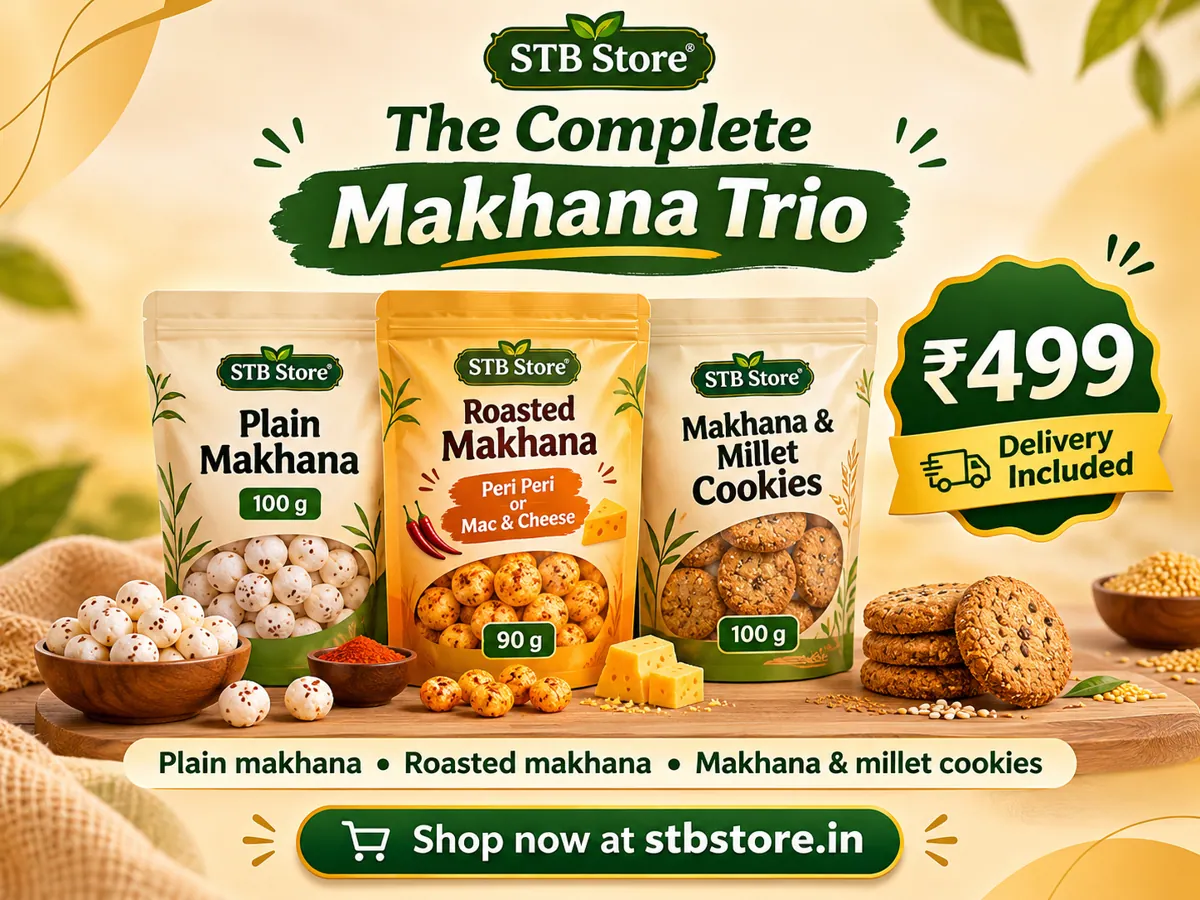
Learning about makhana is easier when you can compare an everyday plain ingredient with ready-seasoned and baked formats. The STB Store Makhana Trio offers plain 100 g, a choice of roasted 90 g (Peri Peri or Mac & Cheese), and makhana & millet cookies 100 g. The bundle is ₹499 with delivery included where the PIN code is serviceable. Always check the latest original pack labels, ingredient lists and delivery eligibility before ordering.