The Makhana Journal · Article 5 · Behind the process
How Makhana Is Harvested and Popped: Inside the Skilled Process
Follow makhana from underwater seed collection to grading, drying, roasting and popping, and learn why the process takes skill.
Why a simple snack has a complicated beginning
A bowl of makhana looks effortless: pale, light pieces that crunch with a cup of tea. Yet the white puff was once a small, hard seed collected from an aquatic crop. The journey between those states involves water, physical labour, careful heat and sorting. Understanding that journey changes the way you look at the finished food. It also explains why comparisons between makhana and ordinary ready-to-eat snacks often miss the work happening before a packet ever reaches a shop.
Harvesting is not like picking a fruit
Makhana is traditionally associated with ponds and waterlogged growing conditions. Mature seeds can settle beneath the water, which makes collection a specialised job rather than a straightforward hand-picking operation. Researchers documenting traditional practices in North Bihar describe the knowledge involved in harvesting and handling seeds. Conditions differ across cultivation systems, including newer field-based approaches, so no single video should be presented as the method used on every farm. Water depth, local practices and safety equipment can change how growers work.
The seed still looks nothing like the snack
After collection, the seed is hard and comparatively small. The familiar white, airy structure is created later. Collected material needs to be separated from dirt and other unwanted matter before the next steps. Cleaning is not a cosmetic detail: particles introduced during harvest do not belong in the finished food. Sorting can also help processors group seeds by size, which makes subsequent treatment more consistent. Modern processing systems can incorporate equipment for washing and grading while traditional operations may use manual methods.
Drying and grading make the next step more predictable
Different-sized seeds do not respond to heat in exactly the same way. If they are processed as one mixed batch without care, some may be under-treated while others get too much heat. Grading is therefore part of process control, not just appearance. Drying and intermediate handling are also significant because moisture influences how seeds behave when heated. Precise times and temperatures depend on the process and machinery; it would be misleading to present an arbitrary home-kitchen temperature as an industrial standard.
Roasting is not yet the finished snack
Industrial and traditional sequences generally involve heat treatment before popping. A seed is heated so its internal structure is prepared for expansion. In documented traditional processing, working near high temperatures and handling very hot seeds creates an occupational challenge. ICAR has reported mechanisation efforts for threshing, cleaning, grading, drying, roasting and popping. The aim is not simply greater speed: suitable machinery may help improve consistency and reduce exposure to strenuous, risky manual work.
The moment of popping
Popping changes the hard seed into the airy white form we recognise. The physical transformation is striking, but it should not be confused with tossing already-popped makhana into a home frying pan. Those are two different operations. At home, we generally crisp and season an ingredient that has already been popped by processors. A professional demonstration should make that difference clear. It is also why trying to recreate commercial seed-popping methods with improvised high-heat equipment at home is not a sensible beginner's recipe.
Sorting after popping
Not every piece from a batch has identical expansion, shape or colour. Producers can sort popped makhana to separate unusable pieces and organise product grades. Buyers might notice a variation in size among packs sold under different descriptions. Size alone is not a complete test of quality; a good pack also needs appropriate cleanliness, aroma, dryness and protective packaging. For recipes that rely on small pieces or powdered makhana, appearance requirements may be different from those for a serving bowl.

From processor to shelf
Once the popped product meets its quality requirements, packaging helps protect its texture from handling and humid air. Plain makhana may be sold as a versatile pantry ingredient, while other producers add oil and seasoning for ready-to-eat flavours. Those additions create new ingredient and allergen considerations. A consumer reading a label should not assume that every roasted makhana product has the same formulation, just as every batch may not have followed the same processing route.
What readers should appreciate
The makhana supply chain includes growers, harvesters, seed handlers, processors, graders, packers and retailers. Real people and technical choices stand between the pond and the snack bowl. If you visit a production unit or share an educational video, identify the location and consent of the workers shown; do not use unrelated footage as if it documents a specific manufacturer. The most useful story is accurate and respectful of the people whose work makes the snack possible.
A closer look at traditional expertise
The physical skill involved in traditional popping is worth explaining without romanticising difficult working conditions. Workers need to recognise how seeds respond during processing and coordinate different stages. Research on the Mallah community's traditional knowledge shows why the process cannot be described as merely boiling a seed and waiting for it to expand. Respecting that expertise also means recognising the importance of improved tools, worker safety and fair commercial relationships. A documentary about makhana should avoid treating workers as picturesque background scenery: show hands, methods and context accurately, with permission from the people filmed.
Where machines help—and where they do not erase the story
Equipment can be developed for washing, grading, drying and other processing operations. This does not mean every local producer uses identical equipment or that all traditional practices have disappeared. A large processing unit may use an integrated line; a smaller unit may combine machinery with manual sorting. If you see a fast social-media clip showing an automatic popper, treat it as one possible method rather than evidence about every farm in Bihar. The important principle is process control: consistent handling helps protect food quality, while suitable technology may improve workplace conditions.
How to explain the process to children
Use four labelled pictures: a water-grown plant, a hard seed, a heating stage and the finished white puff. Ask children which item looks like the snack they eat. Then explain that not every seed is ready to eat straight from harvest. This activity teaches the difference between a crop and a processed ingredient without encouraging children to experiment with industrial temperatures or heavy cooking equipment. If you prepare a classroom snack, use commercially popped makhana and follow normal food hygiene and allergy precautions.
Reader questions
Can I pop raw makhana seeds in my home pan?
Industrial or traditional seed-popping is a specialised high-heat process. Home roasting normally begins with already-popped makhana.
Why is makhana graded?
Sorting by size and condition can support more consistent processing and product presentation.
Explore more at STB Store
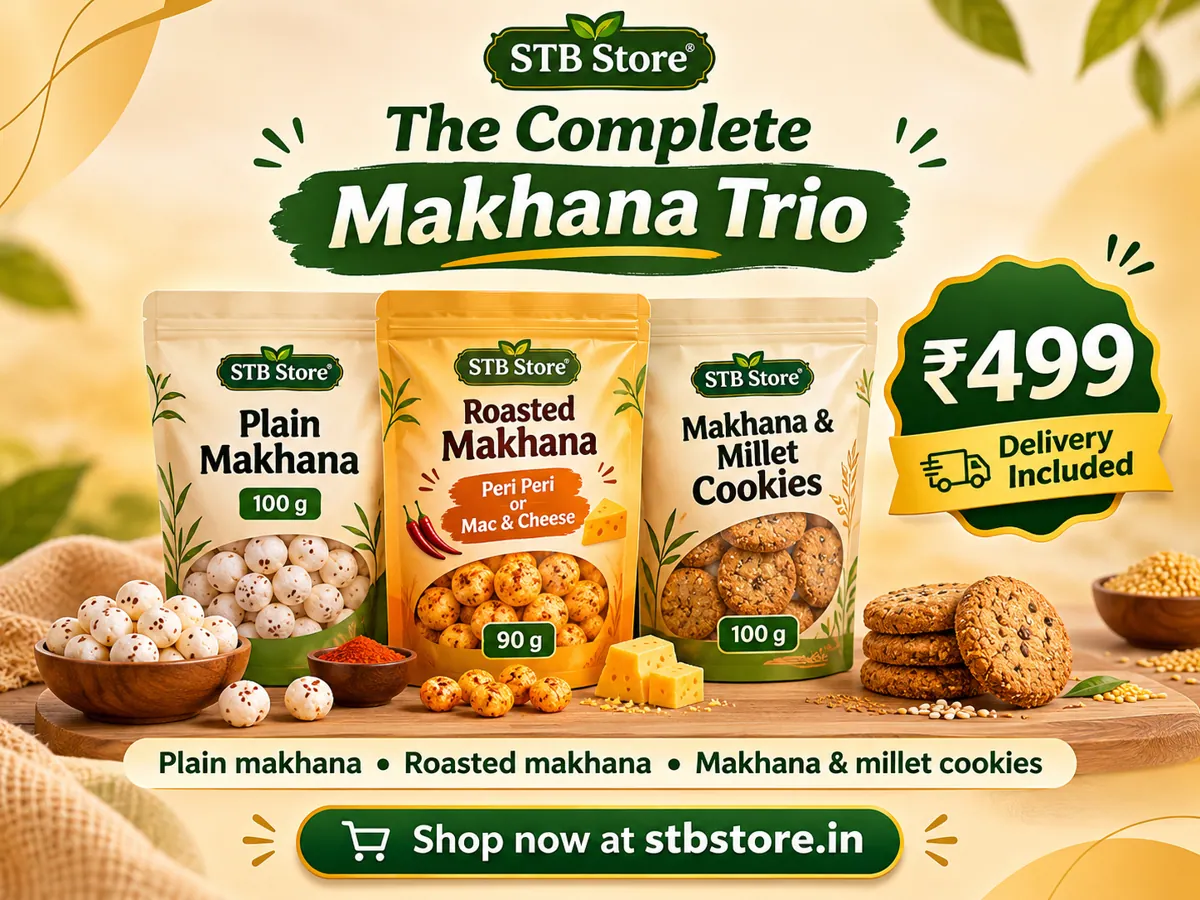
Learning about makhana is easier when you can compare an everyday plain ingredient with ready-seasoned and baked formats. The STB Store Makhana Trio offers plain 100 g, a choice of roasted 90 g (Peri Peri or Mac & Cheese), and makhana & millet cookies 100 g. The bundle is ₹499 with delivery included where the PIN code is serviceable. Always check the latest original pack labels, ingredient lists and delivery eligibility before ordering.